Charcoal vs. HEPA: Which Filter Do You Actually Need?
November 08, 2025
Filters
Buying Guide
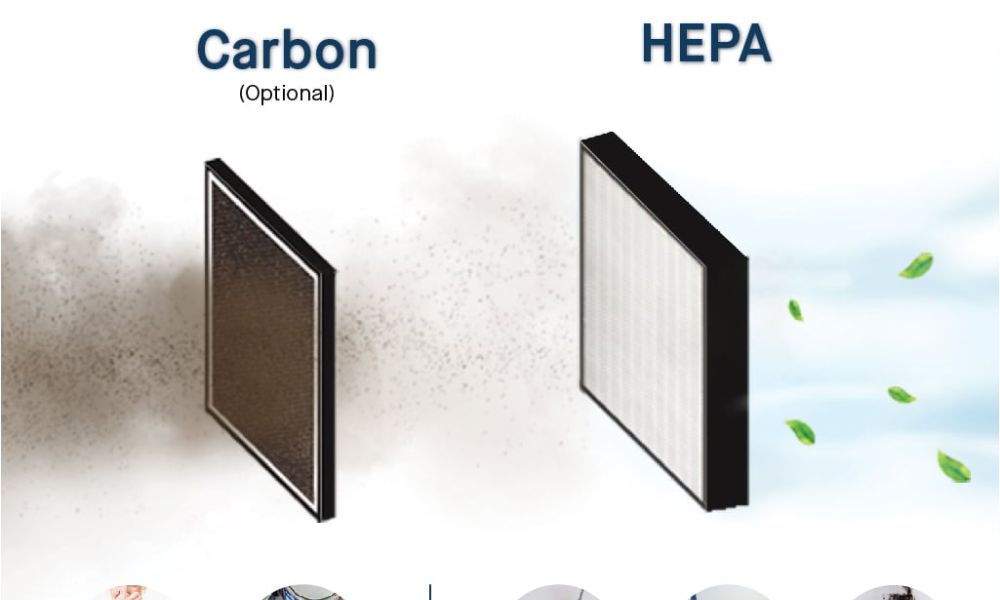
Air purifier marketing is messy. They promise to remove "toxins," "odors," and "allergens" all at once. But inside the box, different filters do completely different jobs. If you buy the wrong one, you won't solve your problem.
1. HEPA = The Net
Think of a HEPA filter as a very fine fishing net.
- Catches: Solids. Dust, pollen, pet dander, mold spores, smoke particles.
- Misses: Gases. Cooking smells, chemical fumes (VOCs), cigarette smoke odor.
- Best For: Allergies, asthma, general dusty homes.
2. Activated Carbon = The Sponge
Think of Carbon (Charcoal) as a chemical sponge.
- Catches: Gases. It traps odor molecules and volatile chemicals in millions of tiny pores.
- Misses: Dust. A carbon filter does nothing for pollen.
- Best For: Kitchen smells, smokers, homes near busy roads (exhaust fumes), or after painting.
3. The "Combo" Trap
Most cheap air purifiers claim to have carbon, but it's just a thin black foam sheet impregnated with a dusting of carbon.
- The Reality: These "carbon sheets" saturate in a few weeks. They are useless for heavy odors.
- What You Need: For real odor control, you need a filter with pounds of carbon pellets, usually found in units costing $300+.
4. Which One Should You Prioritize?
For 90% of people, HEPA is more important.
- Particle pollution (PM2.5) causes long-term heart and lung damage.
- Odors are annoying, but usually less dangerous (unless it's carbon monoxide, which neither filter stops!).
Summary
If you are sneezing, get True HEPA. If you smell your neighbor's dinner, get heavy Activated Carbon. If you want both, prepare to pay for a premium unit.