Low-VOC Paint and Ventilation: What Actually Helps
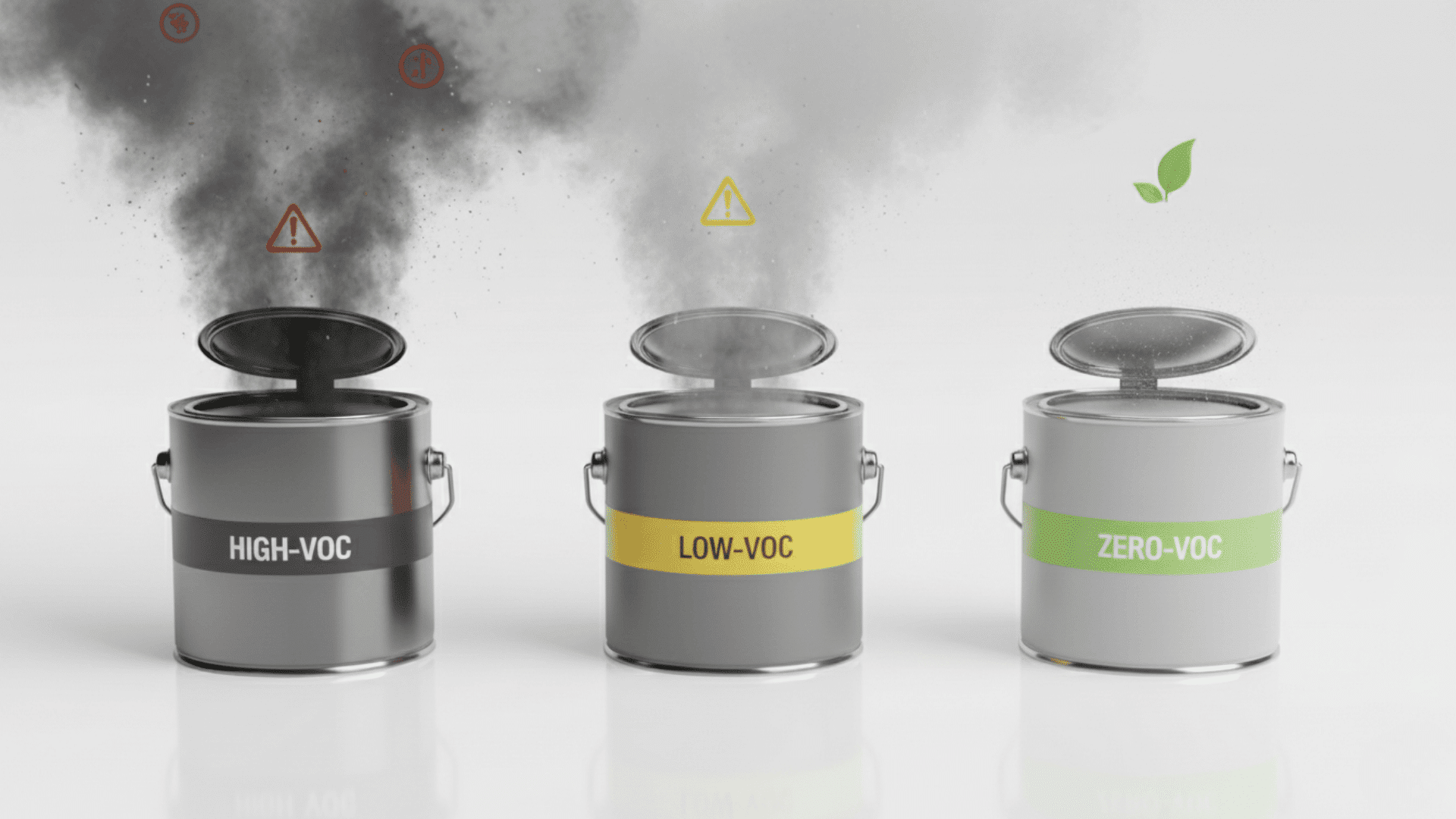
You have seen "Low-VOC" or "Zero-VOC" on paint cans, but that doesn't mean the fumes are harmless. Even eco-friendly paints release chemical off-gassing as they cure. If you rush the process, you trap those chemicals in your home for weeks. Here is how to paint safely.
1. What Does "Low-VOC" Actually Mean?
VOCs (Volatile Organic Compounds) are solvents that evaporate into the air as paint dries. They cause headaches, dizziness, and long-term health risks.
- Standard Paint: High levels of solvents. Smells strong for weeks.
- Low-VOC: Fewer than 50 grams of VOCs per liter. Still has some odor.
- Zero-VOC: Fewer than 5 grams per liter. However, adding color tint usually adds VOCs back in. So "Zero-VOC" base + dark blue tint = Low-VOC paint.
2. Prep Your Ventilation Plan
Don't rely on a single open window. You need a cross-breeze.
- The Push-Pull Method: Put a box fan in one window blowing out (exhaust). Open a window on the opposite side of the room to let fresh air in. This creates a vacuum that pulls fumes directly outside.
- Seal the Door: Use painter's tape to seal the gap under the door leading to the rest of the house. You want air to flow through the room, not into the hallway.
3. Timing Is Everything
Paint dries to the touch in hours, but it cures over days. Off-gassing continues long after the wall feels dry.
- Active Painting: Keep fans on high. Wear a respirator (N95 helps with mist, but a charcoal mask is needed for fumes) if you are sensitive.
- First 24 Hours: Keep windows open if weather permits. Do not sleep in the room.
- First Week: Keep the door closed and windows cracked. Run an air purifier with a carbon filter to catch lingering molecules.
4. Temperature Control
Paint cures best in moderate humidity and temperature (50-70°F / 10-21°C).
- Too Hot/Dry: It dries too fast on the surface, trapping solvents underneath. This leads to "solvent pop" (bubbles) and prolonged smell.
- Too Cold/Humid: It stays wet forever and risks mildew.
5. Furniture Strategy
Don't move furniture back in immediately. Soft surfaces (sofas, mattresses, carpets) absorb VOCs like a sponge and re-release them slowly over months.
- Wait: Give the room at least 48-72 hours of aggressive ventilation before bringing in fabric items.
Summary
"Low odor" does not mean "safe to breathe." Treat every paint job like a chemical project: isolate, ventilate, and evacuate until the cure is complete.