HEPA Filters Explained: What They Do and When You Need One
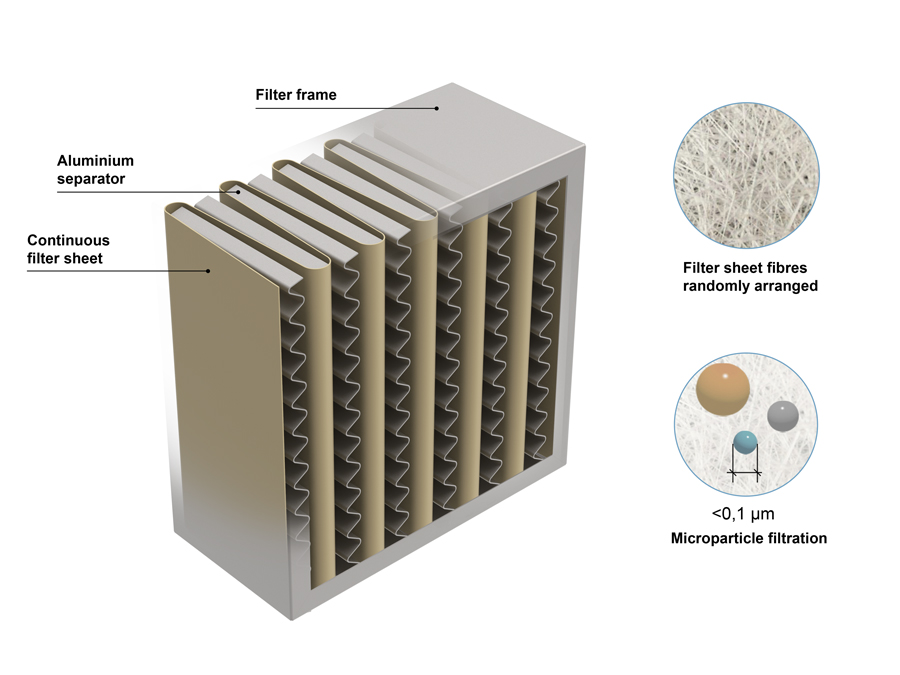
"HEPA" is a buzzword slapped on everything from vacuum cleaners to air purifiers. But what does it actually mean? Is a "HEPA-Type" filter the same thing? (Spoiler: No, it isn't.) Here is the technical truth behind the marketing.
1. The Gold Standard Definition
HEPA stands for High Efficiency Particulate Air. To legally carry this label in the US and Europe, a filter must meet a strict standard:
- It must capture at least 99.97% of particles that are 0.3 microns in diameter.
- This includes: Pollen, mold spores, pet dander, dust mites, and most bacteria.
- It does not include: Viruses (smaller than 0.3 microns) or odors/gases (which are molecules, not particles).
2. Beware of Marketing Tricks
If a box says "HEPA-Type," "HEPA-Style," or "99% HEPA," put it back on the shelf. These are inferior filters that mimic the look but not the performance.
- True HEPA (H13/H14): Medical grade. Captures 99.95% to 99.995%. The best choice for home use.
- EPA (E10-E12): "Efficient Particulate Air." Good, but not HEPA. Captures 85-99.5%. Okay for general dust, bad for severe allergies.
3. HEPA vs. Carbon (The Dynamic Duo)
A HEPA filter is a physical net. It catches solid stuff. It cannot stop smells.
- For Smoke/Odors: You need an Activated Carbon filter. This is usually a black sheet or a honeycomb layer filled with charcoal pellets.
- The Best Units: Have a Pre-filter (for hair/dust) + True HEPA (for allergens) + Activated Carbon (for smells).
4. Lifespan and Maintenance
A HEPA filter is like a sponge—eventually, it gets full.
- Vacuuming: You can vacuum the pre-filter (the outer mesh), but never vacuum the HEPA filter itself. It ruins the delicate fibers.
- Replacement: Typically every 6–12 months. If you run it 24/7 or live in a polluted city, change it every 4–6 months.
- Color Check: A new filter is white. A dead filter is dark gray. If it's black, you are breathing dirty air.
5. Does It Stop Viruses?
Technically, viruses are smaller than 0.3 microns. However, viruses don't fly alone; they travel on droplets (sneeze/cough) or dust particles. HEPA filters catch the droplets and dust, effectively trapping the virus attached to them. So yes, they reduce viral load in a room.
Summary
When shopping, look for two words: "True HEPA". Anything else is a compromise.