Do Salt Lamps Actually Clean the Air? (Science vs. Hype)
October 12, 2025
Myths
Decor
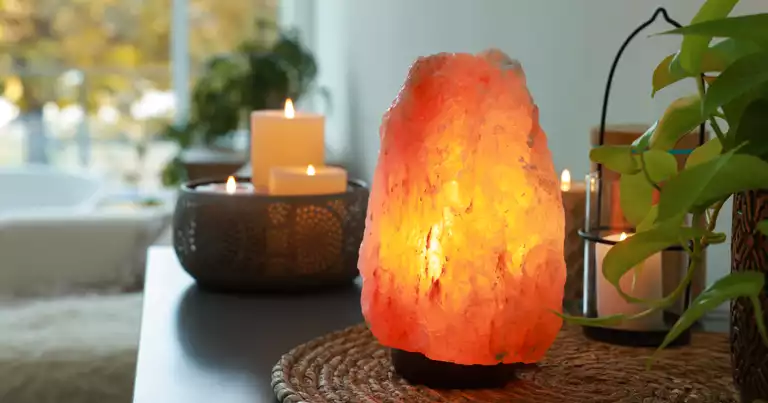
Himalayan salt lamps are a staple of wellness decor. The claim is that they release "negative ions" that neutralize pollutants, allergens, and electromagnetic radiation. It sounds magical. Sadly, physics disagrees.
1. The "Negative Ion" Theory
The idea is that heat from the bulb causes the salt to release ions, which stick to dust particles and make them fall to the ground.
- The Reality: Salt is extremely stable (it's rock!). To break the ionic bond and release ions, you would need to heat the salt to over 800°C (1400°F). A 15-watt lightbulb barely warms it to 40°C.
- Measurement: Tests with ion counters show that salt lamps produce zero detectable ions.
2. Hygroscopy (Water Attraction)
Salt does attract water vapor. In a humid room, a salt lamp might "sweat" or drip water.
- The Claim: By attracting water, it traps pollutants carried in the water droplets.
- The Reality: The surface area of a lamp is tiny. It might trap a microscopic amount of dust on its surface (which you have to wipe off), but it has no fan to circulate air. It cannot "clean" a room any more than a rock can.
3. What They Are Good For
Don't throw it away! Salt lamps are excellent for:
- Sleep Hygiene: The warm, amber glow contains very little blue light. It is the perfect bedside lamp that won't disrupt your melatonin production.
- Mood: The soft light is psychologically soothing (Hygge).
4. The Danger to Pets
This is serious. Cats love to lick salt lamps.
- Risk: Salt toxicity. A cat can easily overdose on sodium by licking the lamp, leading to seizures and kidney failure. If you have pets, keep the lamp out of reach.
Summary
Buy a salt lamp because it looks beautiful and helps you sleep. Do not buy it to clean your air. For that, you need a filter, not a rock.